
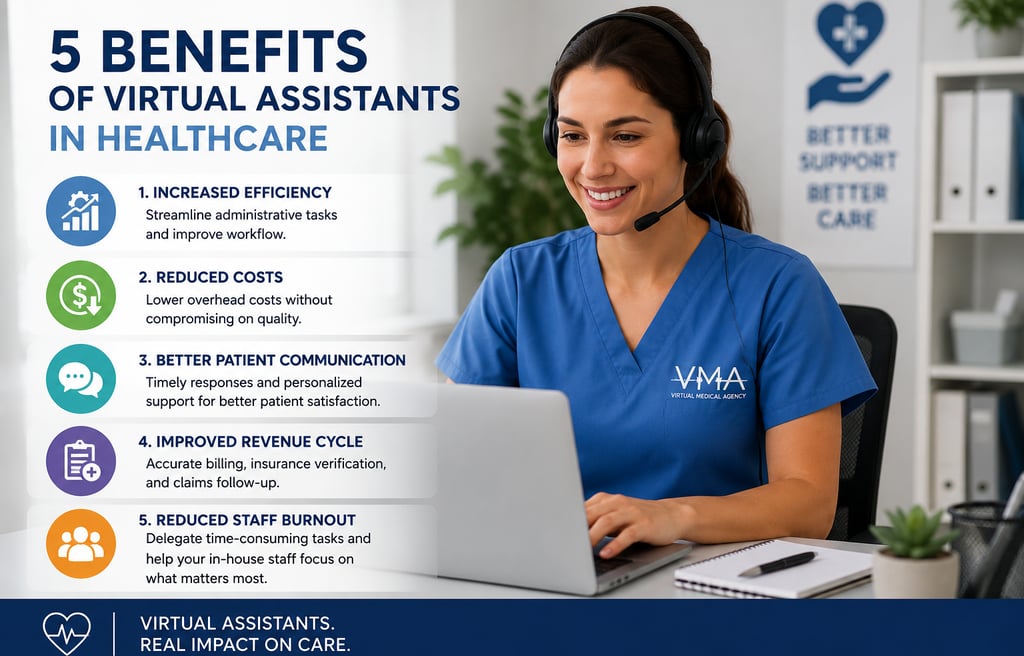
5 Benefits of Virtual Assistants in Healthcare
Cost savings, efficiency, improved patient experience – the advantages of virtual assistants are undeniable. Learn how this revolutionary approach can improve your healthcare company.
VIRTUAL MEDICAL ASSISTANT
How Virtual Medical Assistants Help Healthcare Practices Improve Efficiency and Patient Care
The healthcare industry is evolving rapidly, and medical practices are constantly looking for ways to improve efficiency while maintaining exceptional patient care. Administrative responsibilities such as scheduling appointments, verifying insurance, managing patient communications, and processing documentation often consume valuable time that providers could spend with patients.
This is where Virtual Medical Assistants (VMAs) make a significant difference. By providing remote administrative support, VMAs help healthcare practices streamline daily operations, reduce costs, and improve the overall patient experience.
Let's explore five key benefits of using Virtual Medical Assistants in healthcare.
1. Increased Operational Efficiency
One of the greatest advantages of hiring a Virtual Medical Assistant is improved workflow efficiency.
Healthcare providers often juggle clinical responsibilities alongside administrative tasks. A VMA can manage routine office duties, allowing physicians and in-house staff to focus on delivering quality patient care.
Common tasks include:
Appointment scheduling
Calendar management
Patient registration
Medical record updates
Referral coordination
Prescription refill requests
With administrative work handled efficiently, practices can operate more smoothly and see more patients each day.
2. Reduced Administrative Costs
Hiring additional in-office employees comes with expenses beyond salary, including office space, equipment, employee benefits, and training.
Virtual Medical Assistants work remotely, helping practices reduce overhead costs while still receiving professional administrative support.
Benefits include:
No additional office space required
Lower equipment costs
Flexible staffing options
Scalable support based on patient volume
This makes VMAs a cost-effective solution for practices of all sizes, from solo providers to multi-specialty clinics.
3. Better Patient Communication
Excellent communication plays a major role in patient satisfaction.
Virtual Medical Assistants help practices stay connected with patients by:
Answering incoming calls
Responding to patient portal messages
Scheduling follow-up appointments
Sending appointment reminders
Handling general patient inquiries
Timely communication reduces missed appointments, improves patient trust, and creates a more positive healthcare experience.
4. Improved Revenue Cycle Support
Administrative errors can delay reimbursements and negatively affect cash flow.
Virtual Medical Assistants support the revenue cycle by assisting with:
Insurance verification
Prior authorization tracking
Claims preparation
Billing coordination
Payment posting
Follow-up on outstanding claims
Accurate administrative support helps minimize claim denials and ensures practices receive payments more efficiently.
5. Reduced Staff Burnout
Medical office staff often manage multiple responsibilities throughout the day, leading to stress and burnout.
By delegating repetitive administrative tasks to a Virtual Medical Assistant, in-house employees can focus on higher-priority responsibilities while providers spend more time with patients.
The result is:
Improved employee morale
Increased productivity
Better work-life balance
Reduced turnover
Stronger overall team performance
A supported staff creates a better experience for both patients and healthcare providers.
Why More Healthcare Practices Are Choosing Virtual Medical Assistants
Healthcare organizations across the country are increasingly adopting virtual support to improve efficiency without compromising quality.
Virtual Medical Assistants are commonly used in:
Primary Care Practices
Family Medicine
Internal Medicine
Pediatrics
Cardiology
Orthopedics
Behavioral Health
Urgent Care Centers
Specialty Clinics
Whether a practice needs help with scheduling, patient communication, insurance verification, or billing support, a Virtual Medical Assistant can become an essential part of the healthcare team.
How to Choose the Right Virtual Medical Assistant
When selecting a Virtual Medical Assistant provider, healthcare practices should look for:
HIPAA-compliant processes
Healthcare industry experience
Knowledge of Electronic Health Record (EHR) systems
Strong communication skills
Reliable administrative support
Flexible staffing options tailored to practice needs
Partnering with an experienced healthcare-focused virtual staffing provider ensures your practice receives dependable and professional support.
Final Thoughts
As healthcare continues to evolve, practices must find smarter ways to balance administrative responsibilities with patient care. Virtual Medical Assistants offer a practical solution by improving efficiency, lowering operating costs, enhancing patient communication, supporting the revenue cycle, and reducing staff burnout.
By integrating a Virtual Medical Assistant into your workflow, your practice can operate more efficiently while allowing providers to focus on what matters most—delivering exceptional patient care.
If you're looking to streamline your operations and improve productivity, partnering with a trusted Virtual Medical Assistant provider can help your practice grow with confidence.