
How Virtual Medical Assistants Can Support Your Practice
Virtual medical assistants are the ultimate administrative allies from appointment scheduling to medical billing. Offload time-consuming tasks and regain your focus on delivering exceptional patient care.
VIRTUAL MEDICAL ASSISTANT
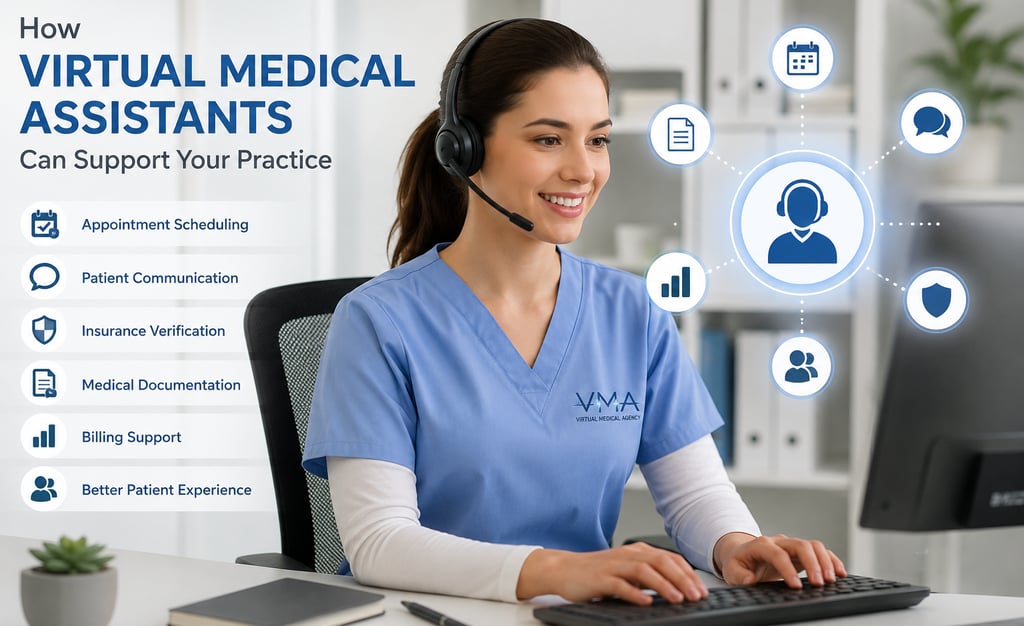

Improve Efficiency, Reduce Administrative Burden, and Enhance Patient Care
Running a successful medical practice requires more than providing exceptional patient care. Healthcare providers must also manage appointment scheduling, insurance verification, patient communication, medical documentation, billing coordination, and countless administrative responsibilities. These time-consuming tasks can reduce productivity, increase staff burnout, and limit the number of patients a practice can serve.
A Virtual Medical Assistant (VMA) offers a practical solution by handling many of these administrative responsibilities remotely, allowing physicians and office staff to focus on delivering quality healthcare.
What Is a Virtual Medical Assistant?
A Virtual Medical Assistant is a trained healthcare support professional who works remotely to assist medical practices with daily administrative and operational tasks. Unlike traditional in-office staff, virtual medical assistants use secure, HIPAA-compliant systems to perform essential duties without occupying physical office space.
Whether you operate a private practice, specialty clinic, or multi-provider office, a VMA can become an extension of your existing team.
Key Ways Virtual Medical Assistants Support Your Practice
Appointment Scheduling and Calendar Management
Missed appointments and scheduling conflicts can negatively impact patient care and revenue. Virtual Medical Assistants help by:
Scheduling new patient appointments
Managing follow-up visits
Rescheduling cancellations
Sending appointment reminders
Coordinating provider calendars
Efficient scheduling helps maximize provider availability while improving the patient experience.
Patient Communication
Patients expect quick responses and clear communication.
A Virtual Medical Assistant can:
Answer incoming phone calls
Respond to patient inquiries
Return voicemails
Manage secure patient portal messages
Provide basic administrative information
This improves patient satisfaction while reducing front desk workload.
Insurance Verification
Insurance verification is one of the most time-consuming tasks for medical offices.
Virtual Medical Assistants can:
Verify patient insurance eligibility
Confirm coverage before appointments
Review patient benefits
Identify authorization requirements
Help reduce claim denials
Proper verification helps practices avoid delays and improve revenue cycle efficiency.
Medical Documentation Support
Accurate documentation is essential for quality patient care and reimbursement.
Depending on your workflow, Virtual Medical Assistants can assist with:
Preparing patient charts
Updating demographic information
Organizing medical records
Uploading referrals and lab results
Reviewing documentation for completeness
This allows providers to spend more time with patients rather than paperwork.
Billing and Revenue Cycle Support
Many administrative delays occur after the patient leaves the office.
Virtual Medical Assistants can support billing teams by assisting with:
Claim preparation
Payment posting
Follow-up on unpaid claims
Prior authorization tracking
Revenue cycle coordination
A smoother billing process contributes to healthier cash flow.
Referral Coordination
Managing specialist referrals often requires multiple phone calls and documentation.
A VMA can:
Process referral requests
Coordinate with specialists
Obtain necessary records
Track referral status
Communicate updates to patients
This keeps referrals organized and improves continuity of care.
Prescription Refill Coordination
Medication refill requests arrive throughout the day and can interrupt clinical workflows.
Virtual Medical Assistants help by:
Processing refill requests
Coordinating provider approvals
Updating pharmacy information
Communicating with patients regarding refill status
This streamlines medication management while maintaining provider oversight.
Benefits for Healthcare Providers
Adding a Virtual Medical Assistant provides several measurable benefits:
Increased Productivity
Providers spend less time on administrative work and more time treating patients.
Lower Operating Costs
Because Virtual Medical Assistants work remotely, practices often save on:
Office space
Equipment
Utilities
Employee overhead
Improved Patient Satisfaction
Faster response times, efficient scheduling, and better communication create a positive patient experience.
Reduced Staff Burnout
Administrative tasks are shared across a larger support team, reducing stress for in-office employees.
Greater Flexibility
Virtual Medical Assistants can scale with your practice as patient volume grows without requiring additional office space.
Which Practices Benefit Most?
Virtual Medical Assistants can support a wide range of healthcare organizations, including:
Primary Care Practices
Family Medicine Clinics
Internal Medicine Offices
Pediatrics
Cardiology
Orthopedics
Behavioral Health
Urgent Care Centers
Multi-Specialty Practices
Independent Physician Groups
Whether your practice has one provider or multiple locations, remote administrative support can improve daily operations.
Choosing the Right Virtual Medical Assistant Partner
Not every virtual staffing provider understands healthcare workflows.
When selecting a partner, look for:
HIPAA-compliant processes
Healthcare industry experience
Knowledge of Electronic Health Record (EHR) systems
Strong communication skills
Reliable administrative support
Flexible staffing solutions
Working with a healthcare-focused virtual assistant provider ensures your practice receives knowledgeable, dependable support.
Final Thoughts
Healthcare professionals should spend their time caring for patients—not managing endless administrative tasks. Virtual Medical Assistants provide reliable support for scheduling, patient communication, insurance verification, documentation, referrals, and billing coordination, helping practices improve efficiency without sacrificing quality.
As patient expectations continue to grow, incorporating remote administrative support can help your practice operate more smoothly, reduce staff workload, and create a better experience for both patients and providers.
If your goal is to improve efficiency while maintaining exceptional patient care, partnering with a trusted Virtual Medical Assistant provider may be one of the most valuable investments your practice can make.